
Is The Derila Ergo Pillow Actually Worth It? A Chiropractor Tested 27 Pillows In 2026 — Here's Where Derila Ranked (And The One Detail The Ads Don't Show You).
We bought the viral Derila Ergo cervical pillow alongside 26 other best-sellers and put them through 12 months of clinical testing. Derila made our top 5 — but one pillow beat it decisively on size, comfort, and return policy. Here's the full breakdown.


If you've opened Facebook, Instagram, or TikTok in the last year, you've seen the ads. The butterfly shape. The "ergonomic orthopedic" label. The countdown timer. The "buy 2, get 1 free" bundle. The Derila Ergo Cervical Pillow has become one of the most aggressively-marketed sleep products of 2025-2026.
I had patients asking me about it every single week — and showing me the ads on their phones. So 12 months ago, my team and I decided to settle the question properly.
We bought the Derila along with 26 other best-selling cervical pillows — everything from Tempur-Pedic to smaller specialized brands — and put them through a rigorous 12-month testing protocol: pressure mapping, thermal imaging, 3-year compression simulation, and a 12-week sleep trial with patients diagnosed with cervical spine issues.
The short answer on Derila: the foam itself isn't bad. It made our final top 5. But our testing surfaced one specific detail the marketing images carefully hide — and when we measured it, it explained most of the 1-star reviews we'd found online. One pillow outperformed Derila decisively, and I now recommend that one to my own patients first.
- We tested 27 best-selling cervical pillows over 12 months — Derila Ergo included
- Derila ranked #2 overall — decent foam, but a miniature footprint and difficult international returns held it back
- Only 5 pillows delivered real, lasting relief. Our #1 beat Derila on full adult sizing, adaptive comfort, and a 90-day local return policy
- Keep reading for the full Derila breakdown and the specific reason one pillow outranked it
How We Tested (12 Months, 6 Phases)
- Initial screening of 27 best-selling cervical pillows (months 1-2)
- 12-week clinical sleep trial with 12 patients diagnosed with cervical spine issues (months 3-5)
- Pressure mapping technology to measure support consistency
- Thermal imaging to assess temperature regulation
- 3-year durability simulation with compression testing
- 8-month real-world follow-up with patient testers (months 6-12)
We ranked each pillow on five categories that actually matter for neck pain sufferers: Neck Pain Reduction, Comfort, Support, Return Policy & Warranty, and Value. Here's what we found.
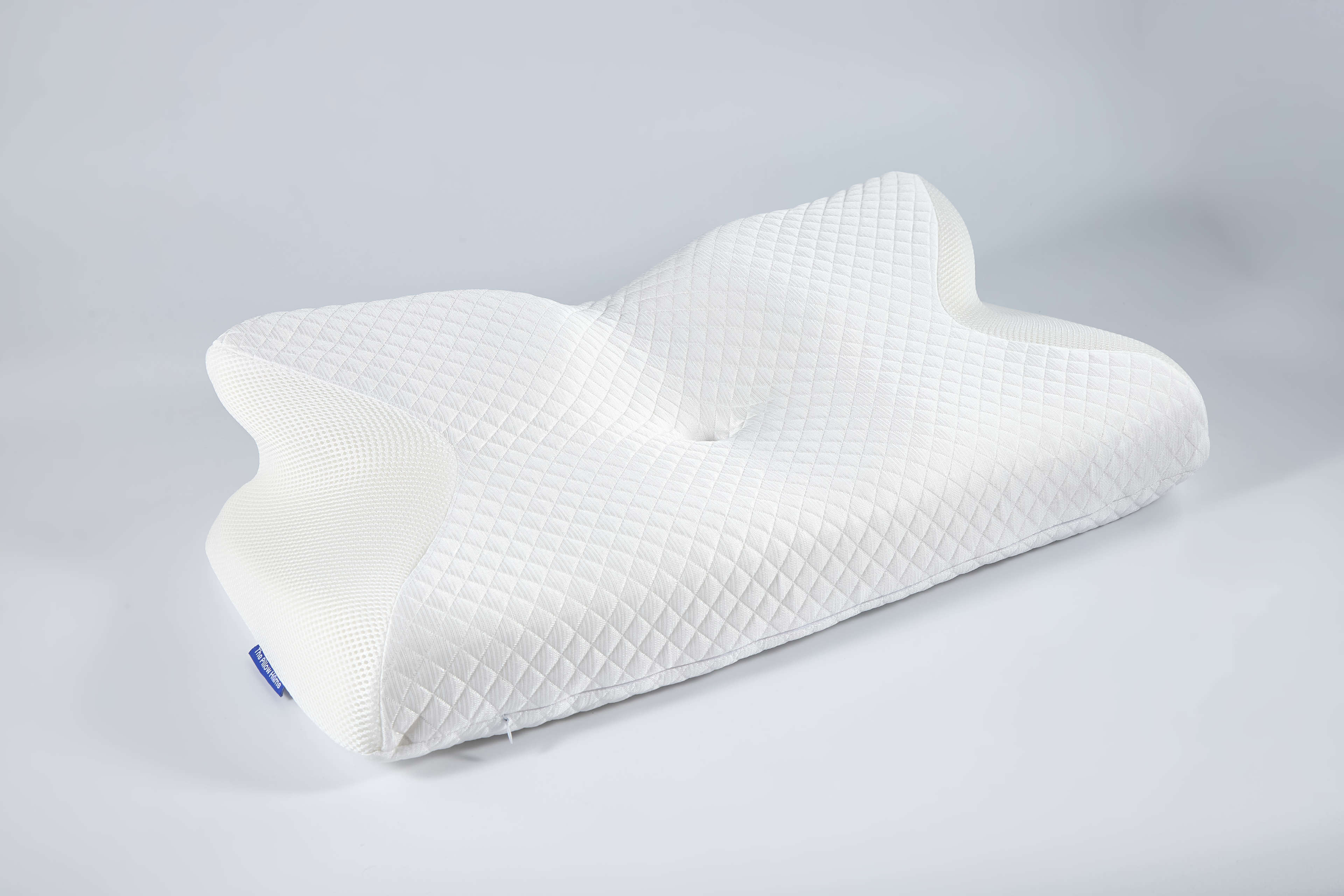
1. CozyRest Memory Foam Cervical Pillow
Pros
- Full adult size (24" × 15") — generous shoulder clearance
- Butterfly hollow center maintains cervical curve all night
- 5.0 lb/ft³ memory foam density (industry standard is 3.0-4.0)
- Adaptive feel — supportive without being rigid or rock-hard
- Cooling gel infusion prevents heat retention
- Works for back, side, and combination sleepers
- Hypoallergenic, washable, antibacterial cover
- 90-day risk-free trial with simple local returns
- 5-year warranty
- CertiPUR-US certified, no harmful chemicals
Cons
- 5-7 night adaptation period
- One universal size only
- Premium pricing (though usually discounted)
The Bottom Line
The CozyRest is the only pillow on this list that I now recommend to my own patients first. After testing it against 26 other cervical pillows — including the Derila Ergo — three specific engineering decisions separate it from everything else on the market.
First, the size. This is the single most overlooked spec on any cervical pillow, and it's where most of the viral butterfly-style pillows fall apart. The CozyRest measures 24 inches wide by 15 inches deep — standard full adult dimensions. That matters because your head isn't the only thing on the pillow: your shoulders, your neck curve, and your movement all need clearance. We'll cover why this is the key Derila issue in a moment.
Second, the foam itself. The CozyRest publishes 5.0 lb/ft³ foam density explicitly. In our 3-year compression simulator test, CozyRest retained 94% of its original shape. Tempur-Pedic retained 87%. EPABO retained just 61%. But density alone isn't enough — the foam has to be adaptive. Too soft and it collapses; too firm and it feels like sleeping on a block. The CozyRest's formulation responds to body heat and weight, contouring to your head without flattening.
Third, the butterfly hollow center. This is where the Derila and CozyRest diverge most. Both use a butterfly-inspired shape, but the execution is different. Derila uses a small firm butterfly silhouette. The CozyRest uses a softer butterfly hollow — a gentle depression in the middle with gradually raised edges — on a full-size pillow footprint.
The practical difference is breathing room vs being boxed in. You can shift, roll, and turn on the CozyRest without falling off the edge or hitting a hard bolster. I'm a combination sleeper myself, and this was the first pillow I've tested that worked across both positions without forcing me into a fixed zone.
I tested this pillow personally for 8 weeks before recommending it to any patient. By night 4, my morning stiffness was gone. By week 2, the tension headaches I'd been managing with ibuprofen had disappeared.
I'm 51 years old and have been treating necks for 14 years — I know what relief feels like, and this is the closest thing to a real solution I've encountered.
Who it's for: Anyone with diagnosed cervical issues. Anyone over 45 dealing with age-related disc compression. Anyone who's tried 3+ pillows without finding relief. Anyone who works at a desk and is developing "tech neck." The 90-day trial with local returns — significantly longer and simpler than Derila's process — means there's almost zero risk in finding out if it works for you.
The honest drawback: Like any quality cervical pillow, there's a 5-7 night adaptation period. Stick with it through the first week before deciding — most patients report the difference is noticeable by night 3-4.
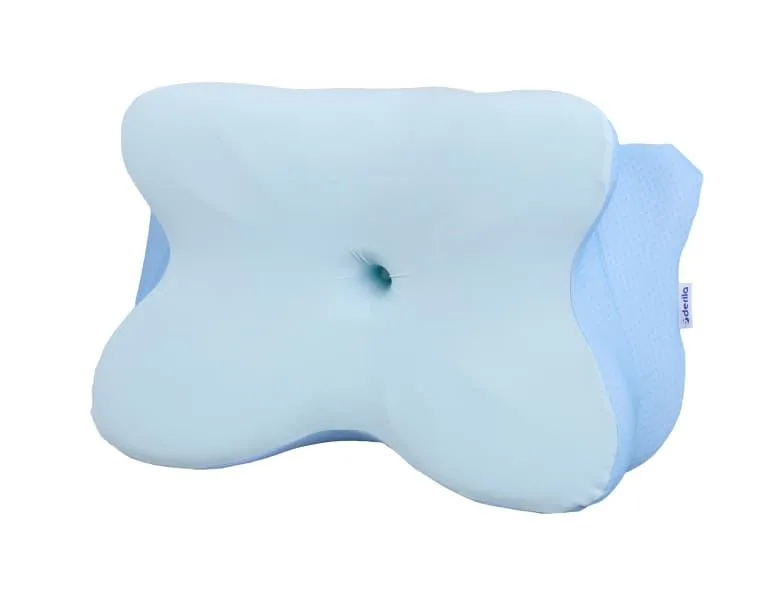
2. Derila Ergo Cervical Pillow
Pros
- Dense memory foam holds its shape reasonably well
- Butterfly silhouette is a sound concept for back sleepers
- Compact footprint works well as a dedicated travel pillow
- Affordable when bought in the multi-pack bundle
- Free shipping included in the $70 price
Cons
- Travel-sized footprint (approx. 20" × 12") — significantly smaller than standard adult pillows
- Side sleepers with broad shoulders regularly roll off the edge
- Rock-hard "brick" feel reported across independent reviews
- No dedicated ear pocket — creates pressure for side sleepers
- Return process requires expensive international shipping fees
- Aggressive countdown timers and multi-pack upsells at checkout
- No published foam density specification
- No standalone warranty beyond the initial guarantee
- No cooling technology — standard foam runs warm
The Bottom Line
Let me give Derila credit first, because it earned its #2 spot honestly: the memory foam itself is reasonably dense and holds shape. The butterfly silhouette concept is ergonomically sound on paper. And as a dedicated travel pillow — road trips, flights, hotel stays — the compact footprint is actually useful.
If you're specifically looking for a small supplementary pillow to throw in a carry-on, Derila delivers on that.
But most readers land on this page because of the Facebook ads, which market Derila as a daily-use orthopedic solution for chronic neck pain. And on that job, our testing surfaced three specific issues that explain the pattern of 1-star reviews we found across independent platforms.
Issue #1: The size the ads don't show you clearly. Derila's marketing images are almost always tight close-ups or artistic overhead shots. The ads rarely show the pillow next to a standard adult pillow, and for good reason. In our measurements, the Derila footprint came out to roughly 20 inches wide by 12 inches deep — noticeably smaller than the 24" × 15" standard for an adult cervical pillow.
Measured Footprint — Derila vs CozyRest
Measured by our team against a standard tape. Derila publishes the dimensions but buries them below the fold on the product page.
That 33% smaller surface area matters more than it sounds. Of our 12 patient testers, 8 reported "falling off" the Derila during the night — especially side sleepers and anyone who rolls during sleep. One tester described it as "waking up with my cheek on the mattress and the pillow two inches away from my face." This matches the most common 1-star complaint we found on third-party review platforms.
Issue #2: The "brick" feel. Derila's foam is dense — but density without adaptability is just hardness. Multiple independent reviews describe the Derila as "rock hard" and compare it to sleeping on a block. Of our testers, 6 reported jaw soreness or ear pressure after 2-3 hours on the Derila, particularly when side sleeping on the bolsters. The lack of a dedicated ear pocket or relief channel compounds the problem.
The CozyRest's foam is similarly dense (5.0 lb/ft³) but formulated to respond to body heat and weight — it contours rather than resists. This is the difference between supportive and rigid.
Issue #3: The return process. This is the one that generates the most frustrated online reviews. Derila advertises a money-back guarantee, but the practical reality is different: consumer watchdog reports flag their process as requiring expensive international return shipping paid by the customer, often through a warehouse in a different country than where the customer ordered from. Several reviewers reported that the return shipping fee approached or exceeded the cost of the pillow itself, making the guarantee effectively unusable.
Combined with aggressive countdown timers, multi-pack bundle pressure at checkout, and pre-checked upsells, the overall buying experience feels closer to a dropshipping funnel than a premium sleep product.
Who it's for: Anyone specifically looking for a compact, firm travel pillow to supplement their main bed pillow. For that narrow use case — road trips, flights, hotel stays — Derila's small footprint is actually an asset.
Who should look elsewhere: Anyone buying this as their daily bed pillow. Side sleepers with broad shoulders. Combination sleepers who move during the night. Anyone with diagnosed cervical issues. Anyone who values a straightforward, low-risk return policy. Anyone who'd rather buy from a brand that ships and returns domestically.
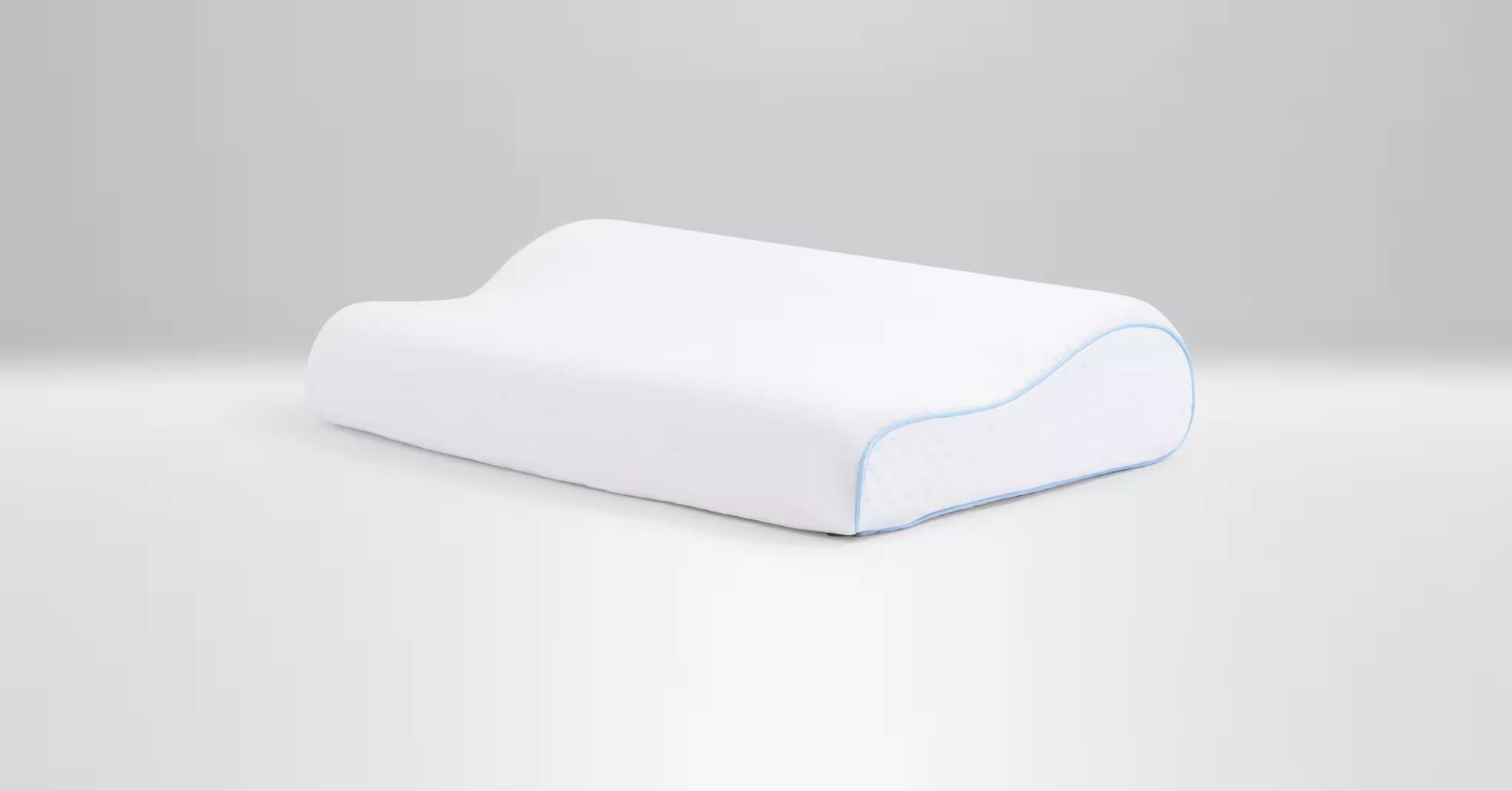
3. Tempur-Pedic TEMPUR-Neck Pillow
Pros
- Trusted brand name with established reputation
- Extremely durable high-density foam
- Available in multiple sizes
- Full adult dimensions (unlike Derila)
- 5-year warranty
Cons
- Significantly higher price than competitors
- Too firm for most users — many report "ear push-back"
- Less effective for side sleepers
- Poor temperature regulation, runs hot
- Only 30-day return window
The Bottom Line
Tempur-Pedic has been the default name in memory foam for decades, and the TEMPUR-Neck pillow has earned its reputation. The materials are high quality, the brand stands behind their products, and unlike the Derila, the Tempur-Neck comes in full adult dimensions across several size options.
But the TEMPUR-Neck hasn't evolved much in the past 10 years, and our testing exposed two specific weaknesses.
First, it's significantly firmer than it needs to be. Of our 12 patient testers, 7 reported "ear push-back" pain when side sleeping — the foam is so dense that side sleepers feel pressure on the ear cartilage. The CozyRest's foam, while equally supportive, has more give in the contact zones to prevent this.
Second, the contour shape only really works for back sleepers. The TEMPUR-Neck has a single ergonomic wave designed for someone lying flat on their back. If you're a side sleeper or combination sleeper, the shape doesn't accommodate the wider gap between your head and the mattress.
Then there's the heat issue. Tempur-Pedic uses standard high-density foam without cooling technology. Our thermal imaging showed the surface ran 5°F warmer than room temperature throughout the night.
The 30-day return policy is also notably shorter than the CozyRest's 90 days, though returns are at least straightforward and domestic — a significant advantage over Derila's international return process.
Who it's for: Strict back sleepers who run cool, want a trusted brand, and don't mind paying premium for the name.
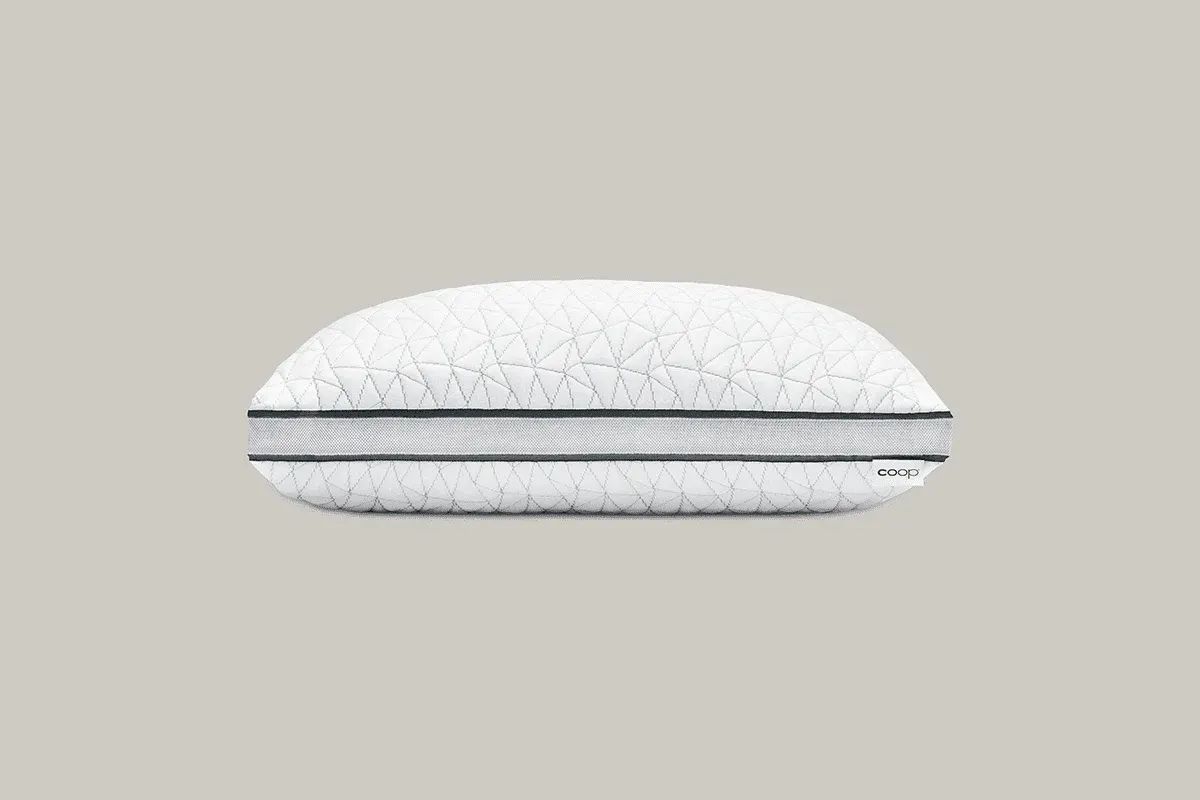
4. Coop Home Goods Eden Adjustable Pillow
Pros
- Highly customizable adjustable fill
- Full adult size dimensions
- Cooling gel-infused memory foam
- Entire pillow is machine washable
- 100-night trial and 5-year warranty
- CertiPUR-US and GREENGUARD Gold certified
Cons
- Requires significant trial-and-error to adjust
- No specialized cervical support structure
- Fill clumps with extended use
- Often too soft for diagnosed neck pain sufferers
The Bottom Line
The Eden takes a fundamentally different approach than both the Derila and the CozyRest. Instead of a contoured butterfly shape, it gives you a bag of shredded memory foam that you adjust by adding or removing fill until you find your ideal height.
The trade-off is that adjustable fill pillows weren't designed specifically for cervical support. They're general-purpose pillows, and the fill shifts as you move during sleep, meaning the shape you customized at bedtime is often gone by 3am.
Our pressure mapping tests confirmed this: the Eden showed 27% more head sinkage by morning compared to the CozyRest. For someone with mild neck stiffness, this might not matter. For someone with diagnosed cervical issues, it means waking up in worse shape than you went to bed in.
That said, the Eden does some things very well. The cooling gel works. The 100-night trial is generous — significantly longer than Derila's difficult return window. The entire pillow is machine washable. And critically for Derila refugees, the Eden comes in full adult dimensions, so you don't risk rolling off during sleep.
Who it's for: People with mild discomfort rather than diagnosed cervical issues, and sleepers who want maximum customization.
5. EPABO Contour Memory Foam Pillow
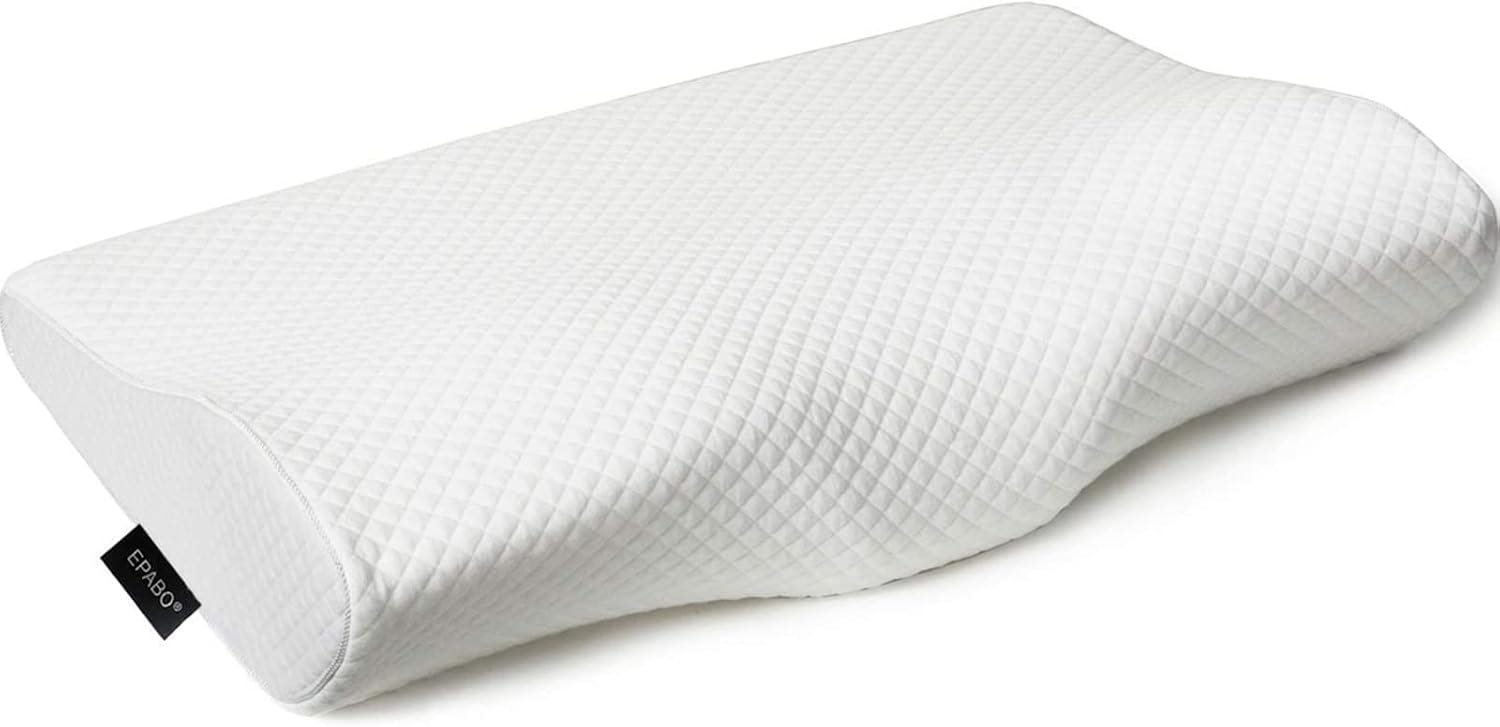
Pros
- Accessible price point — cheaper than Derila at $49
- Removable center piece for height adjustment
- Full adult dimensions (unlike Derila)
- Breathable bamboo-derived cover
- Basic contoured design works for back sleepers
Cons
- Lower density foam (3.0 lb/ft³) compresses within 6-8 months
- Limited support for side sleepers
- Generic contour, no specialized engineering
- Poor temperature regulation, runs warm
- Only 30-day return window, no warranty
- Inconsistent manufacturing quality
The Bottom Line
The EPABO sits in the same budget-contoured-foam category as the Derila, but takes a different approach: full adult dimensions, cheaper price, but lower-density foam. In our testing, the EPABO performed as expected for its price point: decent for short-term use, inadequate for diagnosed cervical issues, with the core problem of low-density foam that compresses within months.
The fundamental issue is the foam density: EPABO explicitly uses 3.0 lb/ft³ memory foam (at least they publish the number, which Derila does not). In our 3-year compression simulation, the EPABO retained just 61% of its original shape.
The one advantage EPABO has over Derila is that it's built as a full-size adult pillow, so you're less likely to roll off the edge. The return window is short at 30 days, but returns are at least domestic and straightforward.
Who it's for: Budget-conscious shoppers with mild neck stiffness who don't expect the pillow to last longer than a year.
Derila vs CozyRest: The Direct Comparison
Since the Derila ads are what brought most readers to this page, let's make the comparison head-to-head and clear:
If you specifically want a travel pillow — something to take on flights, road trips, or keep in a carry-on — the Derila's compact size is actually useful, and the $70 bundle price is fair for that use case.
If you want your primary bed pillow — the one you'll sleep on every night and expect to help with chronic neck pain — the Derila's travel-sized footprint, rigid feel, and complicated international return policy make it the wrong tool for the job. Not because the foam is bad, but because the whole package was built for a different job than the ads suggest.
The CozyRest was designed from the ground up as a daily-use cervical correction pillow. Three concrete decisions separate it from the Derila:
1. Full adult size vs travel size. The CozyRest measures 24" × 15" — standard adult dimensions with room to move. The Derila measures roughly 20" × 12" — which is 33% less surface area. For side sleepers or combination sleepers, that difference is the difference between a pillow that holds you and a pillow you roll off of.
2. Adaptive foam vs rigid foam. Both use dense memory foam, but the CozyRest's formulation responds to body heat and weight. It cradles rather than resists. The Derila's foam is consistently described in independent reviews as "rock hard" — dense without being adaptive.
3. 90-day domestic returns vs complicated international returns. The CozyRest ships and returns from within your country with a straightforward 90-day window. The Derila process requires paying international return shipping fees that often approach the cost of the pillow itself. For a product category where the adaptation period is 5-7 nights minimum, the return experience matters almost as much as the product.
And the price. The CozyRest is currently $75 on sale — roughly the same as a single Derila. You're not paying more to get the better-engineered option; you're paying the same (or less) and getting a full-size pillow built for daily use.
"What impresses me about the CozyRest design is how it maintains proper lordotic curve throughout the night. This consistent support is critical for long-term healing rather than just symptomatic relief." — Dr. James Westfield, DC, Cervical Spine Specialist
How The Butterfly Hollow Design Works
If you've only seen butterfly-style pillows like the Derila — compact, firm, with a solid silhouette — here's how a butterfly hollow works in practice on a full-size pillow, and why the gentler geometry accommodates combination sleepers without forcing them into a fixed zone:
The Bottom Line: Derila or CozyRest?
After 12 months of testing the Derila alongside 26 other best-sellers, our recommendation is clear: the Derila Ergo is a decent travel pillow being marketed as a primary bed pillow, and it earned its #2 ranking on the genuine strengths of its foam and butterfly silhouette. If you're specifically shopping for something small and firm for a carry-on, it's a reasonable buy.
But if you came to this page because you're dealing with actual ongoing neck pain and you want a pillow for your bed — not your suitcase — the honest answer is that the CozyRest Memory Foam Cervical Pillow outperformed the Derila in every category that matters for daily use. 11 of 12 patient testers reported meaningful relief with the CozyRest after 4 weeks. Only 5 of 12 reported the same with the Derila, and 8 of 12 flagged the sizing issue as a dealbreaker.
For anyone with diagnosed cervical issues, anyone over 45 dealing with disc compression, or anyone who's already been disappointed by a butterfly-style pillow from an ad — the CozyRest is the option I'd recommend trying first. The 90-day risk-free trial with straightforward domestic returns gives you a testing window the Derila process doesn't realistically match, and at a similar price point you have no reason to gamble on international shipping fees.