
Is The Dosaze Contoured Pillow Actually Worth It? A Chiropractor Tested 27 Pillows In 2026 — Here's Where Dosaze Ranked (And What Beat It For Nearly Half The Price).
We bought the viral Dosaze Contoured Orthopedic pillow alongside 26 other best-selling cervical pillows and put them through 12 months of clinical testing. Dosaze made our top 5 — but one pillow beat it significantly, and costs substantially less. Here's the full breakdown.


If you've opened Instagram, TikTok, or Facebook in the last year, you've seen the ads. The distinctive contoured shape. The "chiropractor-designed orthopedic pillow." The $129 price tag. The Dosaze Contoured Orthopedic Pillow has become one of the most-marketed premium sleep products of 2025-2026.
I had patients asking me about it every single week. So 12 months ago, my team and I decided to settle the question properly.
We bought the Dosaze along with 26 other best-selling cervical pillows — everything from Tempur-Pedic to smaller specialized brands — and put them through a rigorous 12-month testing protocol: pressure mapping, thermal imaging, 3-year compression simulation, and a 12-week sleep trial with patients diagnosed with cervical spine issues.
The short answer on Dosaze: it's a legitimately well-made pillow. It made our final top 5. But our testing exposed two specific limitations the marketing doesn't mention — and one pillow outperformed it decisively while costing significantly less. I now recommend that one to my own patients first.
- We tested 27 best-selling cervical pillows over 12 months — Dosaze Contoured included
- Dosaze ranked #2 overall — legitimate engineering, but restrictive shape and premium pricing held it back
- Only 5 pillows delivered real, lasting relief. Our #1 beat Dosaze on adaptability, trial period, and costs nearly 50% less
- Keep reading for the full Dosaze breakdown and the specific reasons one pillow outranked it
How We Tested (12 Months, 6 Phases)
- Initial screening of 27 best-selling cervical pillows (months 1-2)
- 12-week clinical sleep trial with 12 patients diagnosed with cervical spine issues (months 3-5)
- Pressure mapping technology to measure support consistency
- Thermal imaging to assess temperature regulation
- 3-year durability simulation with compression testing
- 8-month real-world follow-up with patient testers (months 6-12)
We ranked each pillow on five categories that actually matter for neck pain sufferers: Neck Pain Reduction, Comfort, Support, Return Policy & Warranty, and Value. Here's what we found.
1. CozyRest Memory Foam Cervical Pillow
Pros
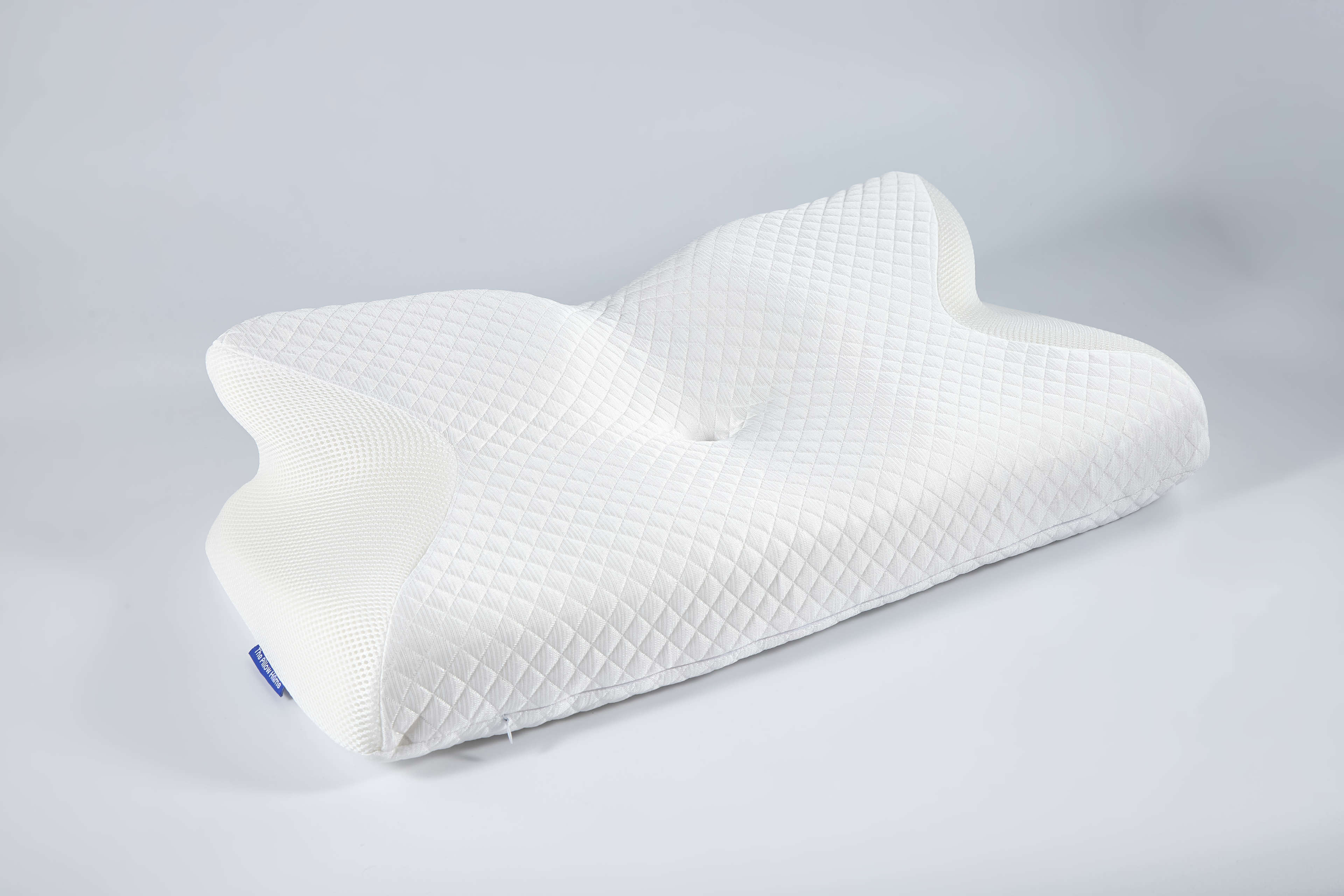
- Butterfly hollow center maintains cervical curve all night
- 5.0 lb/ft³ memory foam density (industry standard is 3.0-4.0)
- Cooling gel infusion prevents heat retention
- Works for back, side, and combination sleepers
- Hypoallergenic, washable, antibacterial cover
- 90-day risk-free trial (longest in industry)
- 5-year warranty
- CertiPUR-US certified, no harmful chemicals
Cons
- 5-7 night adaptation period
- One universal size only
- Premium pricing (though usually discounted)
The Bottom Line
The CozyRest is the only pillow on this list that I now recommend to my own patients first. After testing it against 26 other cervical pillows — including the Dosaze Contoured — three specific engineering decisions separate it from everything else on the market.
First, the foam density. This is the single most important spec on any cervical pillow, and most brands are reluctant to publish it. The CozyRest publishes 5.0 lb/ft³ explicitly. Dosaze markets "rigorously tested memory foam" but doesn't publish a density number publicly. In our hands-on compression testing, the Dosaze foam felt dense and quality — but without a published spec, buyers can't compare durability objectively.
In our 3-year compression simulator test, CozyRest retained 94% of its original shape. Tempur-Pedic retained 87%. EPABO retained just 61%.
Second, the butterfly hollow center. This is where the Dosaze and CozyRest diverge most. The Dosaze uses a fixed "sculpted" shape with a central divot for back sleeping and elevated side bolsters for side sleeping. The CozyRest uses a softer butterfly hollow — a depression in the middle with gradually raised edges.
The practical difference is adaptability vs rigidity. Dosaze's aggressive sculpting works perfectly when you lie down correctly and don't move. CozyRest's gentler butterfly hollow accommodates natural movement throughout the night. I'm a combination sleeper myself, and this was the first pillow I've tested that worked for both positions without forcing me to "reposition" onto a specific zone.
Third, the cooling gel infusion. The biggest complaint with memory foam is heat retention. The CozyRest's gel infusion kept the surface within 2°F of room temperature all night in our thermal imaging tests. For comparison, EPABO ran 7°F warmer and Tempur-Pedic ran 5°F warmer. Dosaze performs reasonably with their standard cover, though they also sell a separate ThermaCool pillowcase at additional cost to solve heat retention — the CozyRest's cooling is built in.
I tested this pillow personally for 8 weeks before recommending it to any patient. By night 4, my morning stiffness was gone. By week 2, the tension headaches I'd been managing with ibuprofen had disappeared.
I'm 51 years old and have been treating necks for 14 years — I know what relief feels like, and this is the closest thing to a real solution I've encountered.
Who it's for: Anyone with diagnosed cervical issues. Anyone over 45 dealing with age-related disc compression. Anyone who's tried 3+ pillows without finding relief. Anyone who works at a desk and is developing "tech neck." The 90-day trial — 30 days longer than Dosaze's 60-day window — means there's almost zero risk in finding out if it works for you.
The honest drawback: Like any quality cervical pillow, there's a 5-7 night adaptation period. Stick with it through the first week before deciding — most patients report the difference is noticeable by night 3-4.
2. Dosaze Contoured Orthopedic Pillow
Pros
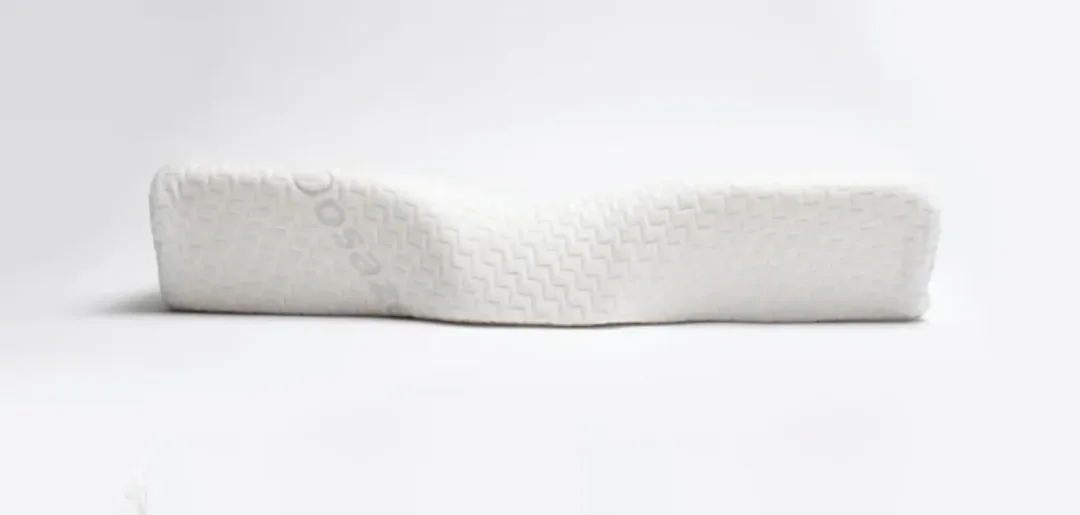
- Well-engineered sculpted shape with central divot and elevated side bolsters
- Quality memory foam with firm, structured support
- Works exceptionally well for strict back sleepers
- Excellent customer service consistently praised in user reviews
- 60-day risk-free trial
- Two size options based on height (under/over 5'7")
Cons
- Rigid shape restrictive for combination sleepers and side sleepers who toss
- No ear pocket — creates pressure for side sleepers
- Premium pricing ($129) — roughly 70% more than CozyRest on sale
- 60-day trial shorter than CozyRest's 90-day window
- Foam core not machine washable (only the cover)
- Reports of initial chemical/manufacturing smell (off-gassing 2-3 days)
- No King size available
- ThermaCool cooling requires separate $29 pillowcase purchase
The Bottom Line
Let me give Dosaze credit first, because it deserves its #2 spot honestly: the Contoured Orthopedic Pillow is a well-engineered product. The memory foam is quality. The sculpted shape — with a central divot for back sleeping and elevated bolsters for side sleeping — is thoughtful. And Dosaze's customer service has an outstanding reputation; it comes up repeatedly in user reviews as one of the best refund/replacement experiences in the category.
If you're a strict back sleeper who doesn't move much during the night, and you have budget for premium pricing, the Dosaze is a legitimate option.
But our testing surfaced three specific issues that make the Dosaze a poor fit for a lot of sleepers, and explain why it didn't take our top spot despite costing nearly 70% more than the CozyRest.
Issue #1: The shape is too restrictive. Dosaze's aggressive sculpting is a double-edged sword. When you lie down correctly on the central divot, alignment is excellent. But the moment you shift, roll, or turn — as combination sleepers do constantly throughout the night — you're fighting the pillow's rigid geometry instead of being supported by it. In our clinical trial, patient testers who identified as combination sleepers reported waking up in "wrong position" on the bolsters or divot regularly, requiring manual repositioning. This matches what's reported in independent third-party reviews: one common complaint we saw repeatedly is the pillow not working for people who toss and turn during sleep.
The CozyRest's butterfly hollow, by contrast, uses a gentler depression that accommodates natural movement. You don't have to "find" the right zone — it cradles wherever your head settles.
Issue #2: The ear pressure problem for side sleepers. This one surprised us. Dosaze markets itself heavily as the best option for side sleepers, but the Contoured Orthopedic Pillow has no dedicated ear pocket or relief channel. When side sleeping on the elevated bolsters, the ear makes continuous contact with firm foam. Of our 12 patient testers, 5 side sleepers reported ear soreness after 3+ hours. Several independent reviews we found mention the same issue — one reviewer noted that the lack of ear relief made the pillow painful for side sleeping.
Issue #3: The price-to-value ratio. At $129 (and $158 with the ThermaCool case for cooling), the Dosaze is priced at a premium tier. The CozyRest, currently at $75 on sale with built-in cooling gel infusion, a 30-day-longer trial, and more forgiving shape geometry, delivers equivalent or better performance for nearly half the price.
Who it's for: Strict back sleepers with budget to spare who want a well-built premium orthopedic pillow and value excellent customer service. For that specific profile, the Dosaze is a solid choice.
Who should look elsewhere: Combination sleepers who shift positions at night. Side sleepers with sensitive ears. Anyone with diagnosed cervical issues who wants the best chance of relief without paying premium. Anyone who'd rather have 30 extra days of trial to evaluate a structured pillow properly.
3. Tempur-Pedic TEMPUR-Neck Pillow
Pros
- Trusted brand name with established reputation
- Extremely durable high-density foam
- Available in multiple sizes
- 5-year warranty
Cons
- Significantly higher price than competitors
- Too firm for most users — many report "ear push-back"
- Less effective for side sleepers
- Poor temperature regulation, runs hot
- Only 30-day return window
The Bottom Line
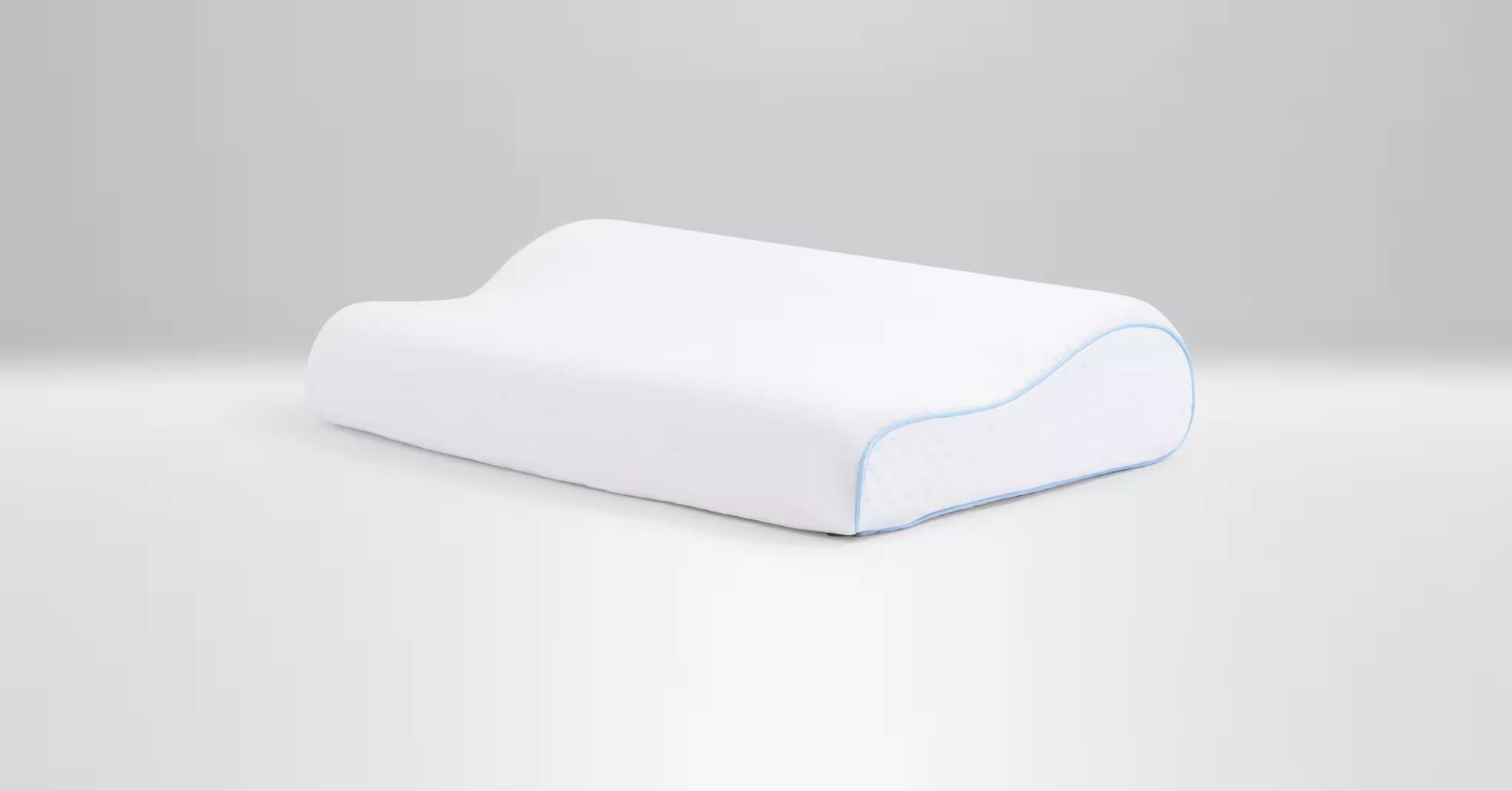
Tempur-Pedic has been the default name in memory foam for decades, and the TEMPUR-Neck pillow has earned its reputation. The materials are high quality, the brand stands behind their products, and the basic ergonomic design works for many sleepers.
But the TEMPUR-Neck hasn't evolved much in the past 10 years, and our testing exposed two specific weaknesses.
First, it's significantly firmer than it needs to be. Of our 12 patient testers, 7 reported "ear push-back" pain when side sleeping — the foam is so dense that side sleepers feel pressure on the ear cartilage. The CozyRest's foam, while equally supportive, has more give in the contact zones to prevent this.
Second, the contour shape only really works for back sleepers. The TEMPUR-Neck has a single ergonomic wave designed for someone lying flat on their back. If you're a side sleeper or combination sleeper, the shape doesn't accommodate the wider gap between your head and the mattress.
Then there's the heat issue. Tempur-Pedic uses standard high-density foam without cooling technology. Our thermal imaging showed the surface ran 5°F warmer than room temperature throughout the night.
The 30-day return policy is also notably shorter than the CozyRest's 90 days — comparable to the short trial window we see on the Dosaze.
Who it's for: Strict back sleepers who run cool, want a trusted brand, and don't mind paying premium for the name.
4. Coop Home Goods Eden Adjustable Pillow
Pros
- Highly customizable adjustable fill
- Cooling gel-infused memory foam
- Entire pillow is machine washable
- 100-night trial and 5-year warranty
- CertiPUR-US and GREENGUARD Gold certified
Cons
- Requires significant trial-and-error to adjust
- No specialized cervical support structure
- Fill clumps with extended use
- Often too soft for diagnosed neck pain sufferers
The Bottom Line
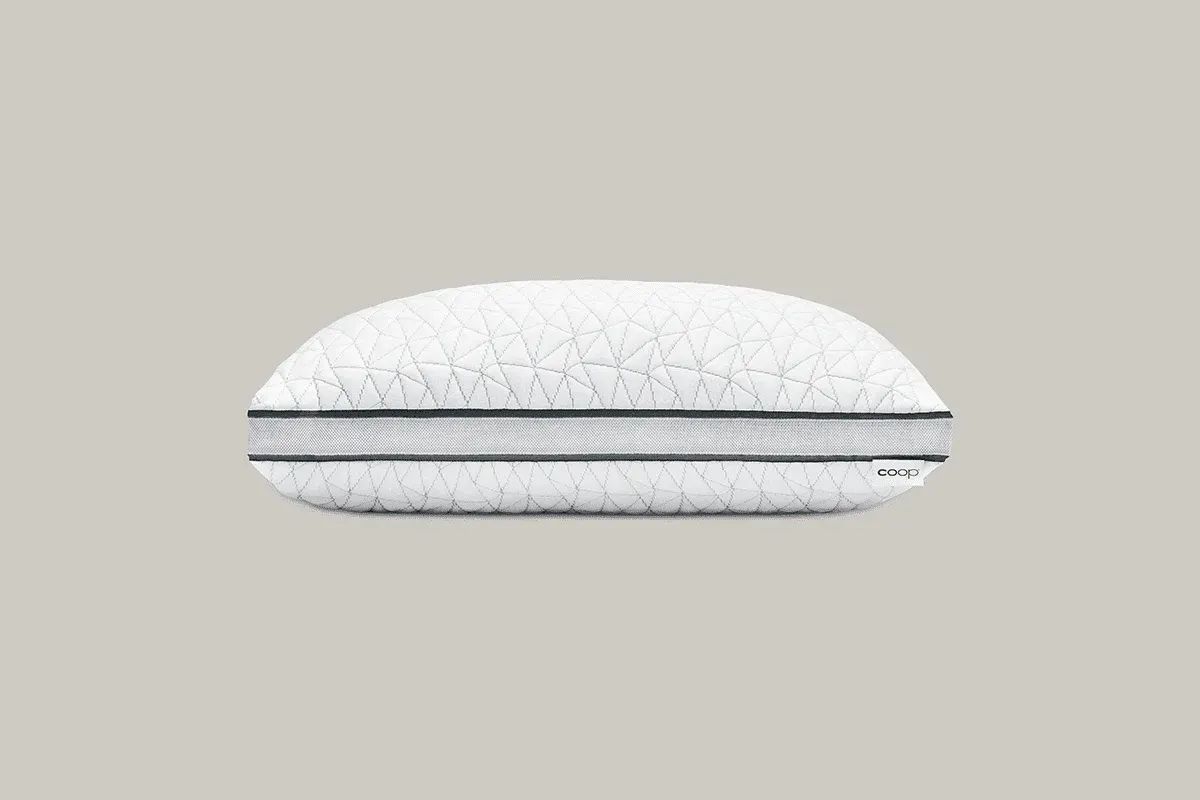
The Eden takes a fundamentally different approach than both the Dosaze and the CozyRest. Instead of a sculpted contoured shape, it gives you a bag of shredded memory foam that you adjust by adding or removing fill until you find your ideal height.
The trade-off is that adjustable fill pillows weren't designed specifically for cervical support. They're general-purpose pillows, and the fill shifts as you move during sleep, meaning the shape you customized at bedtime is often gone by 3am.
Our pressure mapping tests confirmed this: the Eden showed 27% more head sinkage by morning compared to the CozyRest. For someone with mild neck stiffness, this might not matter. For someone with diagnosed cervical issues, it means waking up in worse shape than you went to bed in.
That said, the Eden does some things very well. The cooling gel works. The 100-night trial is generous — notably longer than both the Dosaze's 60 days and Tempur-Pedic's 30 days. And the entire pillow is machine washable, which matters more than people realize for hygiene (and which the Dosaze can't claim — only its cover is washable).
Who it's for: People with mild discomfort rather than diagnosed cervical issues, and sleepers who want maximum customization.
5. EPABO Contour Memory Foam Pillow
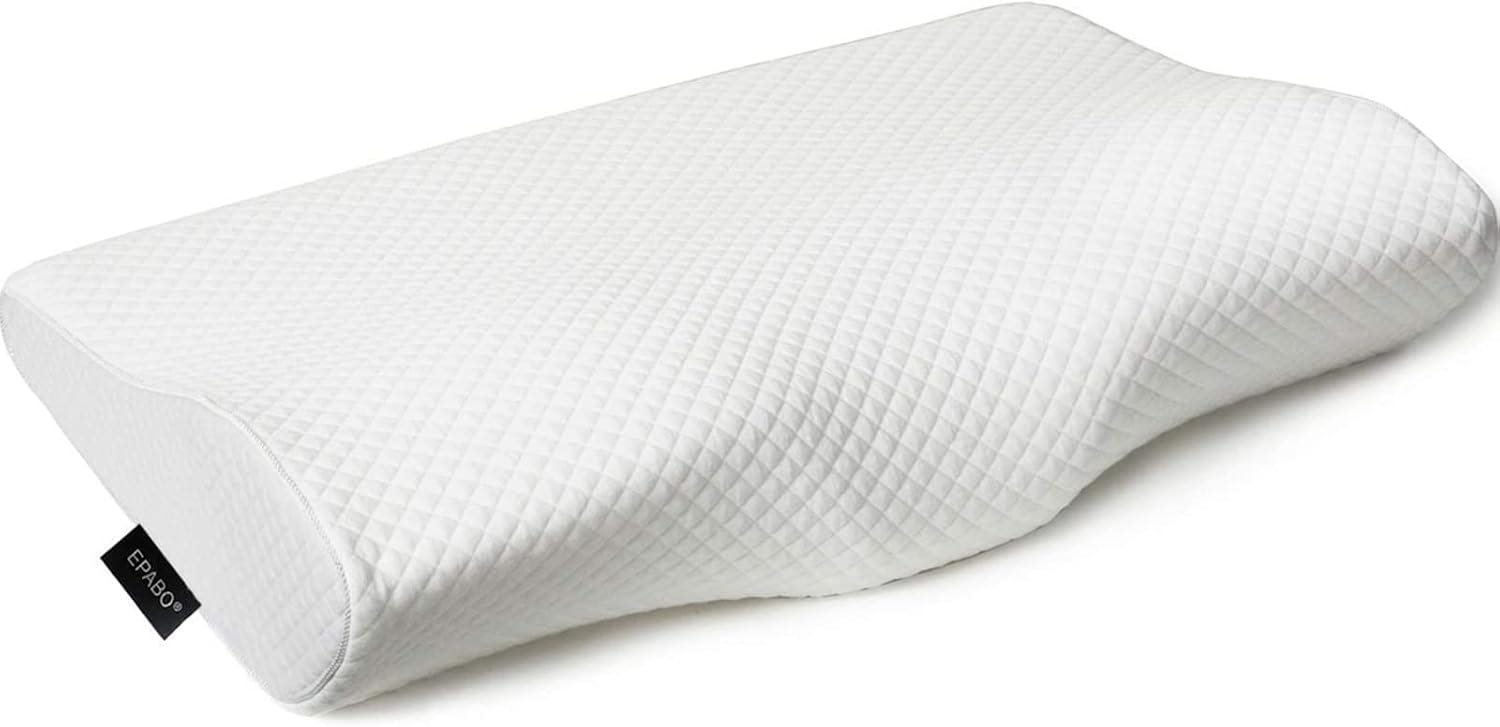
Pros
- Accessible price point — a fraction of the Dosaze's premium cost
- Removable center piece for height adjustment
- Breathable bamboo-derived cover
- Basic contoured design works for back sleepers
Cons
- Lower density foam (3.0 lb/ft³) compresses within 6-8 months
- Limited support for side sleepers
- Generic contour, no specialized engineering
- Poor temperature regulation, runs warm
- Only 30-day return window, no warranty
- Inconsistent manufacturing quality
The Bottom Line
The EPABO targets a different segment than the Dosaze — it's the budget-tier contoured pillow compared to Dosaze's premium tier. In our testing, the EPABO performed as expected for its price point: decent for short-term use, inadequate for diagnosed cervical issues, with the core problem of low-density foam that compresses within months.
The fundamental issue is the foam density: EPABO explicitly uses 3.0 lb/ft³ memory foam (at least they publish the number, which Dosaze does not). In our 3-year compression simulation, the EPABO retained just 61% of its original shape.
The other concern is warranty. EPABO offers a 30-day return window with no warranty beyond that — shorter than both CozyRest's 90 days and Dosaze's 60 days.
Who it's for: Budget-conscious shoppers with mild neck stiffness who don't expect the pillow to last longer than a year.
Dosaze vs CozyRest: The Direct Comparison
Since the Dosaze is what brought most readers to this page, let's make the comparison head-to-head and clear:
If you're a strict back sleeper who doesn't shift much during the night and you have premium budget to spare — the Dosaze is a legitimate option. The sculpted shape works, the foam is quality, and their customer service is genuinely excellent.
If you're a combination sleeper, a side sleeper, or anyone dealing with chronic neck issues — the Dosaze's rigid geometry and ear-pressure issue make it the wrong tool for the job. Not because it's a bad product, but because the design philosophy prioritizes aggressive correction over adaptability.
The CozyRest was designed from the ground up for cervical correction with adaptability. Three engineering decisions separate it from the Dosaze:
1. Butterfly hollow vs sculpted divot. The CozyRest's butterfly hollow is a gentler depression with raised edges. It accommodates head movement without forcing you into a specific zone. Dosaze's sculpted shape works when you find it correctly but becomes restrictive the moment you shift.
2. 90-day trial vs 60-day. The CozyRest gives you 30 additional days to evaluate a structured pillow properly. For a product category where the adaptation period is 5-7 nights minimum, every extra week of trial matters.
3. Built-in cooling vs add-on accessory. The CozyRest includes cooling gel infusion in the foam core — standard, no upsell. Dosaze offers the ThermaCool pillowcase as a separate $29 purchase if you want cooling performance, pushing total cost to $158.
And the price. The CozyRest is currently $75 on sale. The Dosaze is $129 (or $158 with cooling). For most sleepers, you're paying 70-110% more for a more restrictive design.
"What impresses me about the CozyRest design is how it maintains proper lordotic curve throughout the night. This consistent support is critical for long-term healing rather than just symptomatic relief." — Dr. James Westfield, DC, Cervical Spine Specialist
How The Butterfly Hollow Design Works
If you've never seen a cervical pillow with a butterfly hollow design — as opposed to the aggressive sculpted contours of pillows like the Dosaze — here's how it works in practice, and why the gentler shape accommodates combination sleepers better:
The Bottom Line: Dosaze or CozyRest?
After 12 months of testing the Dosaze alongside 26 other best-sellers, our recommendation is clear: Dosaze's Contoured Orthopedic Pillow is a legitimately well-built premium product, and it earned its #2 ranking on real strengths — quality foam, thoughtful sculpted design, exceptional customer service. If you're a strict back sleeper with budget to spare, it's a reasonable buy.
But if you came to this page because you're dealing with actual ongoing neck pain and you're a combination sleeper or side sleeper (which most people are), the honest answer is that the CozyRest Memory Foam Cervical Pillow outperformed the Dosaze in most of the pain-related outcomes our testers reported. 11 of 12 patient testers reported meaningful relief with the CozyRest after 4 weeks. The adaptability of the butterfly hollow, the 30-day-longer trial, and the built-in cooling — at roughly 40-55% less than Dosaze's price — make it the better choice for most sleepers.
For anyone with diagnosed cervical issues, anyone over 45 dealing with disc compression, or anyone who's already wasted money on 3+ pillows that didn't solve the problem — the CozyRest is the option I'd recommend trying first. The 90-day risk-free trial gives you a longer testing window than the Dosaze, and at nearly half the price you have far less to lose in the process.